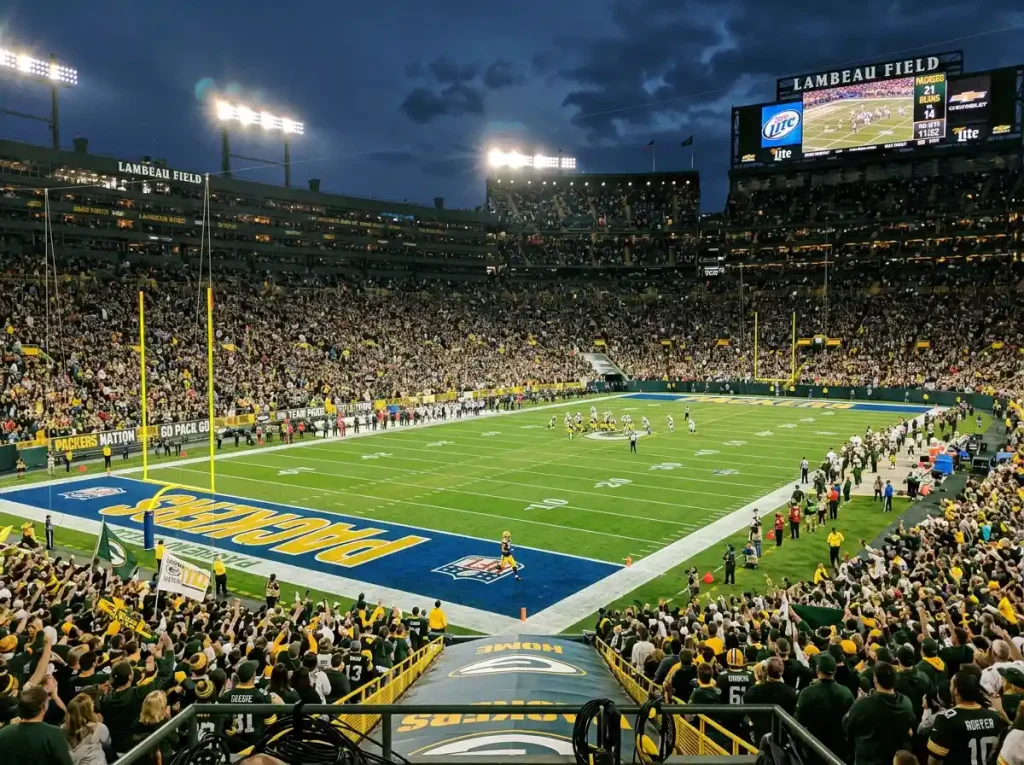
Real-Time Odds Movement and In-Play Value Calculations
 Available in US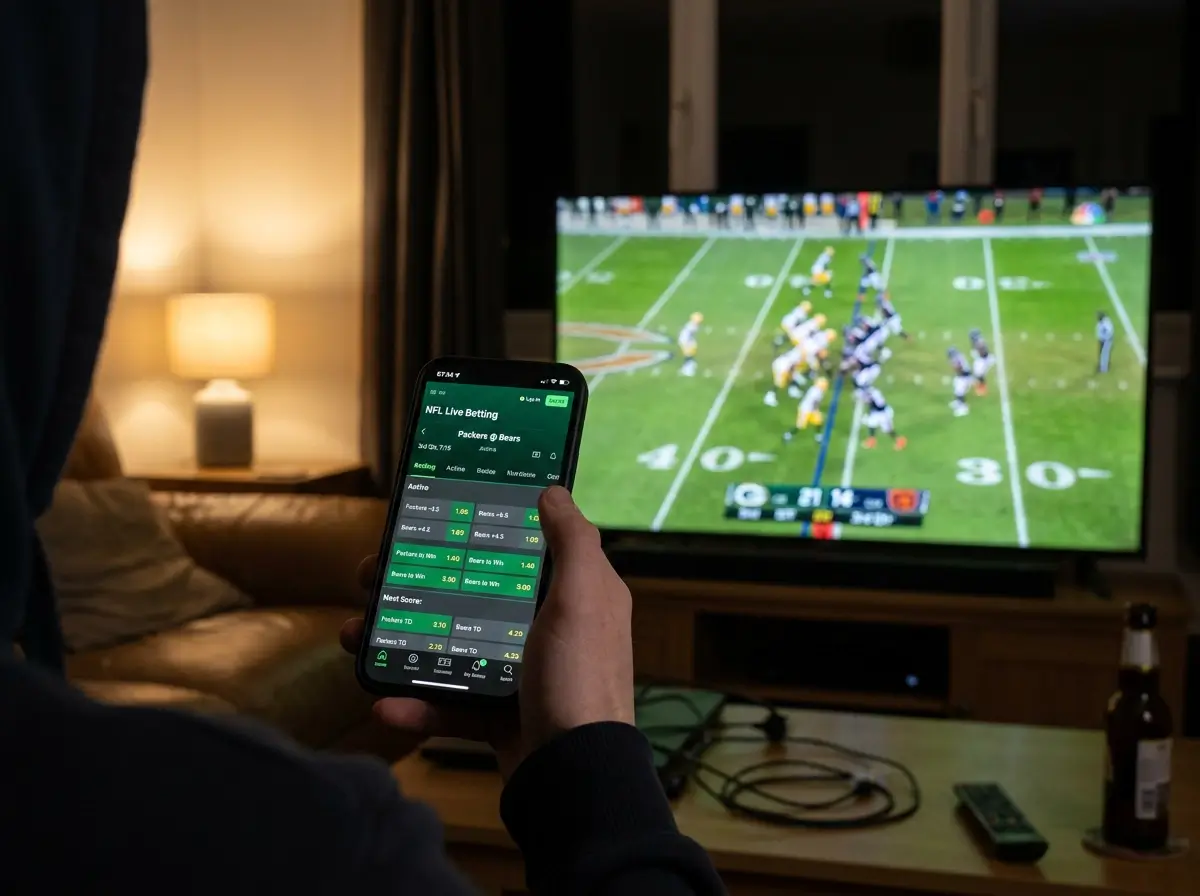
The UK online betting market processes approximately 290 million bets on real sporting events every month, and the in-play share of that figure has grown steadily over the past five years. NFL’s structure — with its natural breaks between plays, television timeouts, and distinct halftime interval — is uniquely suited to live betting. Unlike soccer, where the ball is in continuous play and odds update in a blur, American football gives you discrete moments to assess, decide, and act. Each play has a defined start and end. The clock stops frequently. The sportsbook has time to reprice, and you have time to evaluate.
That structural advantage comes with a specific set of challenges for UK punters. Late-night kickoffs mean your decision-making degrades as the game goes on. Stream delays create an information lag between what you see and what the sportsbook’s algorithms have already priced. The range of in-play markets varies wildly across operators, and some of the most interesting live bets — drive result, next scoring method — are only available at a handful of UK sportsbooks. This article covers the practical mechanics of NFL live betting from Britain: what markets exist, how the odds move, and the strategies that translate game-reading ability into genuine in-play edge.
Managing your in-play risk effectively often involves knowing exactly when to utilize NFL early cash out features to lock in profits.
In-Play NFL Markets Available at UK Sportsbooks
The first thing that surprises most UK punters moving from Premier League to NFL in-play betting is how many markets stay open between plays. In football, the ball is in motion for roughly 55 of 90 minutes, and markets are suspended for only brief intervals. In the NFL, the ball is actively in play for about 11 minutes of a 60-minute game clock. The rest is stoppages, huddles, and commercial breaks. During those stoppages, sportsbook trading desks reprice and reopen markets, giving you windows to bet that simply do not exist in continuous-play sports.
Live spread betting is the most liquid in-play NFL market. The spread updates after every significant play — touchdowns, turnovers, field goals, and sometimes even long completions or penalties that shift field position. If the pre-game spread was -3 for Team A and they fall behind 14-0 in the first quarter, the live spread might swing to Team A +7.5 or wider, depending on the operator’s model. This reset creates entirely new betting propositions that bear little resemblance to the pre-game line.
Live totals operate similarly. The over/under line adjusts based on scoring pace and game context. A game that is 21-17 at halftime might see the total recalculated to 52.5 or higher, while a defensive struggle sitting at 6-3 at the break might drop to 30.5. The live total is one of the few NFL markets where the UK punter can genuinely apply game-watching insight — if you are seeing a quarterback struggle with accuracy in windy conditions, the total may not yet reflect that observation, particularly if the scoreboard shows a higher-than-expected tally from a single explosive play.
Next team to score is a market unique to in-play betting and one of the most popular among UK NFL bettors. After each scoring play, the market reopens with updated odds reflecting the game state. This bet benefits from situational awareness: a team receiving the second-half kickoff after trailing at halftime has a meaningful short-term advantage in this market, particularly if the first-half data suggests their offence moved the ball effectively but failed to convert in the red zone.
Drive result markets are available at select UK sportsbooks and represent the most granular level of in-play NFL betting. Each offensive possession generates a market: will the drive end in a touchdown, field goal, punt, turnover, or other outcome? The odds are repriced continuously as the drive progresses. A first-and-ten at the opponent’s 35-yard line prices very differently from a third-and-long at midfield. These markets demand genuine football knowledge and rapid decision-making, which is why they attract a smaller but more engaged segment of the in-play betting audience.
Quarter betting and next scoring method round out the main in-play categories. Quarter-by-quarter spreads and totals allow you to isolate a 15-minute window rather than committing to the full game. Next scoring method — touchdown, field goal, safety — is a lower-liquidity market but offers interesting value in specific game states, particularly when teams enter field goal range in a low-scoring contest.
Not all these markets are available at every UK sportsbook. In my experience, the largest operators maintain the widest in-play NFL offering, while mid-tier operators may only keep spreads, totals, and moneyline active during live play. Drive result and next scoring method are premium in-play products that require dedicated real-time data feeds to price, and smaller operators often lack the infrastructure. If in-play depth matters to your NFL betting, test the live offering during a pre-season or early regular-season game before committing.
How NFL Live Odds Move During a Game
During a Thursday Night Football game last season, I watched a live spread swing from -2.5 to +4.5 in the space of forty-five seconds. A fumble recovery returned for a touchdown — a 14-point swing in the score from what the market expected — and the trading algorithms responded almost instantly. The speed was impressive and, if I am honest, slightly unnerving. Understanding the machinery behind those movements is essential for anyone placing in-play NFL bets.
Every licensed UK sportsbook receiving real-time NFL data relies on feeds distributed through Genius Sports, which holds the exclusive NFL data rights through 2030. The data flow works like this: each play is logged by an official scorer at the stadium, transmitted to Genius Sports’ platform, and distributed to subscribing operators within seconds. The operator’s trading algorithms ingest the data, recalculate probabilities based on the new game state, and publish updated odds. The entire cycle — play completion to new odds appearing on your screen — typically takes between 5 and 15 seconds, depending on the operator’s infrastructure and the complexity of the play.
Certain play types trigger larger and faster adjustments than others. Touchdowns produce the most dramatic movements because they change the score, alter win probability significantly, and shift the possession. Turnovers — interceptions and fumbles — cause rapid repricing even before the resulting play is resolved, because they represent a swing in both scoring opportunity and field position. Injuries to key players, particularly quarterbacks, generate delayed but substantial movement as the operator’s model recalculates the team’s expected output with a backup at the helm.
The comparison with soccer in-play betting is instructive for UK punters transitioning between sports. In a Premier League match, a goal changes the score by one and typically shifts win probability by 10 to 20 percentage points depending on context. In an NFL game, a touchdown changes the score by six or seven and can shift win probability by 15 to 30 percentage points. The amplitude of movement per scoring event is larger in American football, which means the live odds swing more aggressively and the windows of potential value open wider — but close faster.
For UK punters, the stream delay is the practical constraint. If you are watching the game on a sportsbook’s built-in stream, you are typically 5 to 15 seconds behind the live action. The sportsbook’s algorithms receive data faster than your stream delivers the picture. This means that by the time you see a touchdown on your screen, the odds have already adjusted. The delay is not disqualifying — most in-play bets are placed between plays rather than during them — but it does mean that reactive betting (seeing a turnover and immediately hitting the live spread) is almost always too slow. The advantage goes to anticipatory betting: reading the game state and placing your bet before the pivotal play occurs.
Late-Night Kickoffs: Managing NFL Live Bets From the UK
I have a rule: no live bets after 01:30 GMT. It is an arbitrary line, but I drew it after reviewing a season’s worth of my own in-play betting records and discovering that my strike rate dropped noticeably on bets placed after that time. The correlation was clear — fatigue eroded my judgment, and the bets I placed in the final quarter of late games were impulsive rather than analytical. Every UK-based NFL bettor needs their own version of this rule, because the timezone issue is not an inconvenience — it is a systematic risk to your bankroll.
The standard NFL broadcast schedule from a UK perspective runs as follows. Sunday early games kick off at 18:00 GMT (13:00 ET), finishing around 21:00. The Sunday afternoon window starts at 21:05 or 21:25 GMT, wrapping up near midnight. Sunday Night Football kicks off at 01:20 GMT (20:20 ET on Sunday in the US), finishing around 04:30 Monday morning. Monday Night Football follows a similar late schedule. Thursday Night Football is the most UK-friendly primetime slot, with a 01:15 GMT kickoff — still late, but the game typically concludes by 04:00, and there is no work the next day for most people.
The 18:00 GMT Sunday window is the sweet spot for UK-based live betting. You are alert, the games are plentiful (up to eight simultaneous kickoffs), and you can monitor multiple matches while maintaining decision-making quality. The 21:25 window is manageable but demands discipline — if you are planning to bet in-play on the late afternoon game, commit to that game and avoid splitting attention across too many screens. The primetime 01:20 window is where the timezone exacts its toll. By the third quarter of a Sunday Night Football game, you have been watching NFL for seven or eight hours. The sharpness required for good in-play decisions is simply not there for most people at that point.
Cash-out becomes a strategic tool in this context. If you have placed a pre-game or first-half live bet on a late game, the cash-out function lets you lock in a profit or cut a loss before you reach the fatigue threshold. I routinely cash out positions at halftime of late games if the return is acceptable, rather than riding the bet through a second half I may not watch with full attention. This is not about being conservative — it is about matching your betting activity to your actual cognitive state.
Pre-set alerts are another practical tool. Most UK sportsbook apps allow you to set notifications for specific score changes, odds movements, or cash-out offers reaching a target value. Configure these before kickoff. If you drift off during the third quarter of a late game, an alert can wake you for a cash-out opportunity without requiring you to monitor the screen continuously. It is not elegant, but it is effective.
Combining Live Streaming With In-Play NFL Bets
I spent my first NFL in-play season toggling between a television broadcast and a betting app, and the experience taught me one uncomfortable truth: I was always behind. The TV feed ran on a delay of anywhere from 15 to 45 seconds compared to real-time stadium action, and the sportsbook was pricing off data that arrived faster than my picture. Pairing the right video source with your betting platform is not a luxury — it is the difference between informed wagering and guesswork.
UK punters have two primary viewing routes for NFL coverage. The first is Sky Sports, which has broadcast American football in Britain for over 30 years under a deal recently renewed for another three-year cycle. Sky Sports offers dedicated NFL programming, studio analysis, and multi-game coverage during the Sunday afternoon window. The second route is in-app streaming from the sportsbook itself. Several UKGC-licensed operators embed live NFL video directly into their betting interface, allowing you to watch the game and place bets within the same screen. The quality and availability vary by operator and by the specific game, but when it works, the integration eliminates the need to switch between devices or applications.
The delay difference matters more than most punters realise. A Sky Sports broadcast typically runs 20 to 40 seconds behind the live stadium feed because the signal passes through production trucks, satellite uplinks, and regional distribution before reaching your television. An in-app sportsbook stream usually runs on a shorter delay — often 5 to 15 seconds — because the operator sources a lower-latency feed designed specifically for betting customers. That 15-to-25-second gap between the two feeds creates a practical problem: if you are watching on Sky and a turnover happens, the sportsbook odds will have already moved by the time you see the play. Conversely, if you watch only the sportsbook stream, you get faster pictures but lose the commentary and tactical analysis that help you understand what just happened.
My preferred setup is both feeds running simultaneously. The Sky Sports broadcast goes on the television for context — pre-snap formations, replay analysis, injury updates from the sideline reporters. The sportsbook stream runs on a tablet or phone propped next to the remote, and that is the screen I watch when I am actively considering a bet. The moment I see a significant play on the faster feed, I can evaluate the market before the television catches up. It sounds fiddly, and it is, but the edge compounds over a full game. If you do not have a Sky subscription, free-to-air NFL highlights from Channel 5 and occasional international games help fill gaps, though these are not live and serve better as post-match review material than in-play tools.
One practical note on bandwidth. Running two video streams and a betting app simultaneously demands a stable internet connection. I have had more than one Sunday evening ruined by buffering at the worst possible moment — usually during a two-minute drill when the markets are most volatile. If your broadband struggles with dual streams, prioritise the sportsbook feed and follow the Sky broadcast through the radio commentary or text updates on the app. The in-play betting feed is the one that earns its bandwidth.
In-Play NFL Strategies: Exploiting Game Flow From the UK
The first time I watched a 21-point first-half deficit evaporate into a three-point game by the fourth quarter, I was not betting — I was just watching, slack-jawed, as the comeback unfolded. That experience changed my entire approach to NFL in-play markets. American football generates more betting handle than any other sport in the regulated market — a single NFL Sunday slate outstrips entire weeks of MLB or NBA action — and the sheer volume of money creates opportunities for patient observers who understand how game flow works.
Halftime adjustments are the cornerstone of NFL in-play value. Unlike soccer, where tactical changes tend to be incremental, NFL coaches make wholesale scheme changes at the break. A defensive coordinator who spent the first half in man coverage might switch to a zone scheme that completely neutralises the opposing quarterback. The betting market reacts to the first-half scoreline but often underestimates the impact of coaching adjustments. I look for games where the first-half performance diverges sharply from the season-long statistical profiles of both teams. If a defence that ranks in the top ten for yards allowed has just surrendered 24 first-half points, the market prices as though the floodgates are open. More often than not, those adjustments bring performance back towards the mean in the second half.
Scoring drought patterns offer another angle. NFL games frequently feature extended periods — sometimes an entire quarter — where neither team scores. These droughts occur for structural reasons: conservative play-calling after building a lead, defensive adjustments that take time to solve, weather conditions that worsen as the game progresses. When you spot a scoring drought developing, the live total tends to drift downward because the market extrapolates the current pace. But the drought rarely lasts an entire half. One explosive play — a 60-yard reception, a pick-six, a muffed punt — resets the scoring pace instantly, and the over suddenly has life again.
Garbage time is where disciplined UK punters find some of their best value. When a game reaches a 17-plus-point margin in the fourth quarter, the leading team shifts into a run-heavy approach to burn clock, while the trailing team enters a pass-heavy, hurry-up mode designed to score quickly. The live spread at this point often reflects the blowout scoreline, but garbage-time touchdowns happen with remarkable frequency because the leading defence switches to a prevent scheme that surrenders yards in exchange for running the clock. Backing the trailing team on the live spread during garbage time is not glamorous, but it produces results. The key is discipline: you need to recognise when the leading team has genuinely shifted to clock management rather than still playing to score.
Weather changes mid-game create a specific in-play dynamic that most casual bettors overlook. An NFL game that starts in calm conditions can see wind gusts increase dramatically by the second half, particularly at open-air stadiums in the Midwest and Northeast. When that happens, the passing game suffers and the live total should adjust downward — but the market sometimes lags because the first-half scoring was inflated by better conditions. I track hourly weather forecasts for the stadium location before kickoff so I know whether conditions are expected to deteriorate. If the forecast calls for a wind shift at 19:00 local time and the game’s second half begins around 19:15, I am ready to act on the under before the market fully digests the change.
Bill Miller of the American Gaming Association put it well when he noted that fans now have more ways than ever to responsibly engage with the game they love, and that legal sports betting enhances the competition that makes NFL traditions special. That framing matters for UK punters too. The strategies above work because they are built on understanding the sport, not on chasing losses or throwing money at random outcomes. If you are combining NFL bet builders with live-market analysis, you are constructing a thoughtful approach rather than gambling on impulse — and that distinction is what separates long-term engagement from short-term frustration.
Discover more advanced wagering tactics at the premier NFL betting guide for British punters.
NFL Live Betting: Questions From UK Punters
How quickly do NFL in-play odds update after a touchdown?
Most UK sportsbooks update NFL live odds within 5 to 15 seconds of a scoring play being confirmed by the official data feed. The exact speed depends on your operator’s infrastructure and the complexity of the play. Turnovers and touchdowns cause the most dramatic price shifts, while incomplete passes and short runs produce smaller adjustments. During the update window — those few seconds between the play and the new odds appearing — markets are typically suspended, so you cannot place a bet until the repricing is complete.
Is partial cash out available during NFL live betting?
Several UKGC-licensed sportsbooks offer partial cash out on NFL in-play bets, allowing you to settle a portion of your wager while leaving the remainder active. The feature is particularly useful during late-night games when you want to lock in some profit before the fourth quarter without abandoning the bet entirely. Availability varies by operator and by market type — not all in-play NFL markets support partial cash out, and the option may disappear during periods of high volatility or when markets are suspended between plays.
Which UK sportsbooks have the widest range of NFL in-play markets?
The operators with the deepest NFL in-play coverage tend to be the larger UKGC-licensed sportsbooks that subscribe to the full Genius Sports data package. These typically offer live spread, live total, next team to score, drive result, quarter betting, and live player props during the game. Smaller operators may limit their NFL in-play offering to the core three markets — spread, total, and moneyline — and suspend earlier during close games. The best way to compare is to open accounts with two or three operators and check their NFL coverage during a Thursday Night Football game, which has no competing fixtures to draw the trading team’s attention elsewhere.
This material was created by the UK NFL Betting Analysis team.
Related posts

NFL Cryptocurrency Betting in the UK: Current Status and Regulatory Outlook
NFL Betting Mistakes That UK Punters Make — and How to Fix Them