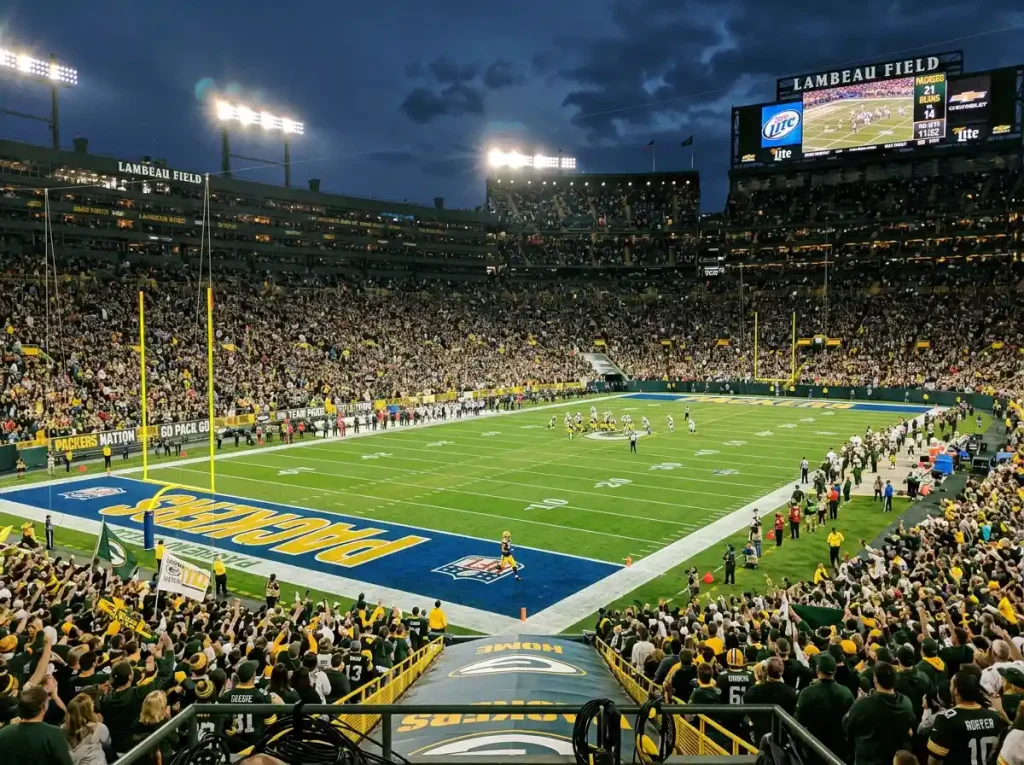
Super Bowl Pricing Breakdowns and Championship Line Mechanics
 Available in US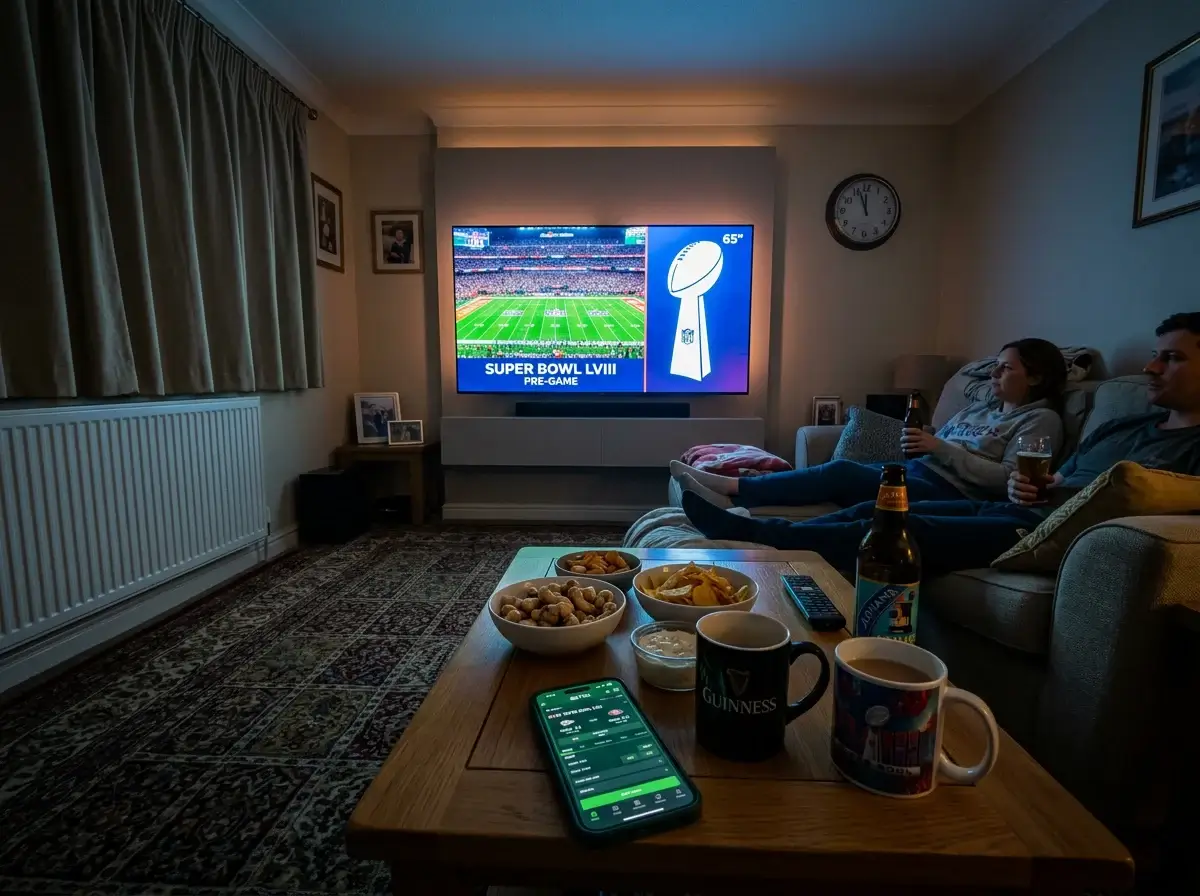
The numbers confirm the spectacle. The American Gaming Association projected a record $1.76 billion in legal bets on Super Bowl LX alone, jumping from $1.39 billion on the previous year’s game. Bill Miller, the AGA’s chief executive, framed it directly: no single event unites fans the way the Super Bowl does, and the record wagering figure reflects how deeply sports betting has become woven into the experience. Those are American figures, but the UK market follows the same gravitational pull — UK sportsbooks offer more markets, more promotions, and more competitive odds on the Super Bowl than on any other NFL fixture.
What makes the Super Bowl unique for British punters is not just the scale but the breadth. During a regular-season NFL game, a typical UK sportsbook might offer 60 to 120 markets. For the Super Bowl, that number inflates to 200, 300, sometimes over 400 individual betting options — including novelty markets like Gatorade colour, national anthem duration, and halftime show props that exist nowhere else in the calendar. This is the one NFL event where the entire spectrum of UK sportsbook functionality is on display, and knowing how to navigate it is the difference between an entertaining flutter and a strategically placed set of bets.
Beyond the standard point spreads, the championship game offers hundreds of entertaining NFL novelty bets ranging from the coin toss to the halftime show.
The Super Bowl Betting Landscape: From Spreads to Halftime Show Props
I keep a spreadsheet — yes, I am that person — where I log the number of available markets on Super Bowl Sunday across five UK sportsbooks. The count has risen every year for the past four years. What started as a curiosity has become a genuinely useful record of how the British market’s appetite for American football betting has expanded, and more importantly, where the gaps between operators are widest.
Game markets form the foundation. These are the same bet types available for any NFL fixture — point spread, moneyline, total points over/under — but with tighter pricing because the volume of global action on the Super Bowl compresses margins. You will find alternative spreads in half-point increments, alternative totals, first-half and second-half lines, quarter-by-quarter markets, and exact score predictions. The game-level betting on the Super Bowl is the deepest single-game market in all of UK sports betting, bar none.
Player props are where the market truly expands. Quarterback props include passing yards, passing touchdowns, completions, interceptions, and longest pass completion. Rushing props cover yards, attempts, and touchdowns for running backs and mobile quarterbacks. Receiving props break down into receptions, receiving yards, and touchdown catches — often available for 10 or more players per side. Then come the cross-category props: anytime touchdown scorer, first touchdown scorer (which carries significant juice in the odds but remains one of the most popular Super Bowl bets among UK punters), and MVP winner. First touchdown scorer markets routinely list 30+ players with individual prices.
Team props and game props add another layer. Will the first score be a touchdown, field goal, or safety? Which team scores first? Will there be a successful two-point conversion? Will either team score in every quarter? These markets attract bettors who want action beyond the main game lines but prefer team-level outcomes to individual player variance.
The novelty markets are the Super Bowl’s signature feature for UK operators, and only a handful of sportsbooks bother with them. These include the colour of the Gatorade (or equivalent) shower dumped on the winning coach, the duration of the national anthem (over/under on a specific time), what the winning quarterback says first in the post-game interview, and props related to the halftime show performance — number of songs played, whether a specific guest artist appears, wardrobe colour. I should be clear: these markets carry massive margins, often exceeding 20%. They are entertainment bets, not value propositions. But they are also exclusively available during Super Bowl week, and for casual NFL punters hosting a viewing party, they add a layer of engagement that standard markets cannot replicate.
The competitive gap in the UK market is visible here. My tracking shows that the largest operators offer novelty markets, while mid-tier and smaller sportsbooks skip them entirely. If novelty props matter to your Super Bowl experience, check availability a full week before the game — the markets appear gradually, with some operators posting them as early as the Monday of Super Bowl week and others waiting until Friday or Saturday.
Super Bowl Kickoff Times and UK Viewing Schedule
The single biggest practical challenge for UK-based Super Bowl bettors is not the odds or the markets — it is the clock. Kickoff for the Super Bowl typically lands around 23:30 GMT, which means the game does not finish until approximately 03:30 or 04:00 the following morning. That is a five-hour commitment starting near midnight on what is technically a Monday morning. I have done it every year for the past nine, and I still have not found a way to make the following Monday at work feel normal.
The broadcast landscape in the UK for Super Bowl night is well-established. Sky Sports carries comprehensive coverage with build-up programming starting several hours before kickoff. ITV has historically offered free-to-air coverage for viewers without a Sky subscription, though the depth of pre-game analysis is thinner. For sportsbook users, the relevant detail is whether your chosen operator offers live streaming alongside in-play markets — a setup that keeps everything on one screen and eliminates the need for a separate broadcast subscription.
The late kickoff directly affects live betting behaviour for British punters. During the first half, engagement is typically high — the novelty of the event and the caffeine are both doing their jobs. By the third quarter, particularly if the game is not competitive, a significant portion of UK bettors have either cashed out, gone to bed, or switched to monitoring via their phone from under the covers. I have seen in-play market liquidity on UK platforms visibly thin out after halftime, which creates a double-edged situation. On one hand, some operators widen their in-play margins when volume drops. On the other, the reduced competition between bettors can occasionally produce mispriced live lines that a focused punter can exploit.
The London game attendance record — 86,152 at Wembley for Rams versus Jaguars in 2025 — and the consistent viewership numbers for NFL internationally (the Vikings-Browns London match drew 6.4 million viewers, a record for an NFL Network London broadcast) confirm that British appetite for American football is not a fringe phenomenon. The Super Bowl amplifies that appetite to its peak, and the late-night timing is simply the price of admission.
Super Bowl Futures: Betting on the Champion Before the Season Starts
I placed a Super Bowl futures bet on a 40/1 outsider in March 2023. The team did not win, obviously — 40/1 outsiders rarely do — but the bet stayed live for seven months, giving me a rooting interest across 18 weeks of regular-season football and into the playoffs. The entertainment value per pound staked was higher than anything else I bet on that year. That is the underappreciated function of futures markets: they are not just a bet, they are a season-long storyline.
Super Bowl futures open almost immediately after the current season’s championship game concludes. By mid-February, every major UK sportsbook lists odds for the following season’s Super Bowl winner. These early lines reflect a combination of the previous season’s performance, coaching changes, free agency rumours, and the sportsbook’s own liability management. The prices are at their most generous at this stage — the overround on a 32-team futures market in February can exceed 140%, but the individual prices on longshots are proportionally higher than they will be at any other point.
The calendar creates three distinct value windows for Super Bowl futures. The first is post-Super Bowl through free agency in March, when roster changes are speculative and the market has not yet reacted to signings. The second is post-draft in late April, when a team that lands a franchise-altering pick may see its odds shorten significantly within days — punters who anticipated the pick beforehand capture the pre-draft price. The third is during the first two weeks of the regular season, when overreactions to early results create temporary mispricings. A team that loses its opener by a narrow margin might drift from 12/1 to 16/1, not because its championship probability genuinely declined by that much, but because public sentiment shifted.
Conference winner bets offer a middle ground between full Super Bowl futures and individual game betting. By betting on a team to win the AFC or NFC rather than the Super Bowl outright, you are effectively halving the number of games they need to win. The odds are shorter, but the probability of collection is meaningfully higher. I use conference winner markets as a hedge or complement to Super Bowl futures — if I back a team at 25/1 for the Super Bowl, I will sometimes place a smaller bet on the same team at 10/1 for the conference, creating a payout structure that rewards deep playoff runs even if the team falls short of the final game.
The practical caution for UK punters is margin awareness. Early-season futures are structurally expensive because the operator embeds a wide margin across 32 teams. As the field narrows through the season, margins compress, but so do the available prices. The optimal approach is selective: identify two or three teams with a genuine championship pathway that the market has underpriced, place the futures bet early, and accept that the majority of these bets will lose. Futures are a portfolio play, not a conviction play.
Super Bowl Betting Strategies That Work for UK Punters
Let me describe the worst Super Bowl bet I ever placed. It was a six-leg same-game multi combining the first touchdown scorer, a quarterback passing yards over, a team total, the spread, halftime result, and the exact fourth-quarter margin. The combined odds were astronomical. Every single selection lost. Not one leg even came close. I share this not as a cautionary tale about same-game multis — they have their place — but because the Super Bowl’s sheer volume of available markets creates a gravitational pull toward complexity. More is not better. Strategy is about selecting the right markets, not all of them.
Line shopping on the spread is the highest-value activity you can do before Super Bowl kickoff. The game attracts so much global betting volume — $30 billion flowed through legal US sportsbooks across the entire 2025 NFL season, and a meaningful share concentrates on this single game — that the spread market is the most liquid and most tightly priced of the year. Even a half-point difference in the spread or a marginal improvement in the odds between sportsbooks represents genuine value at scale. If you are going to bet the Super Bowl spread, check at least three UK operators and take the best number. This is the one game where every operator is competitively motivated to offer a tight price.
Player prop correlation is a strategy that works particularly well for the Super Bowl because the volume of available props creates opportunities to identify combinations that move together. If you believe a game will be high-scoring, the quarterback passing yards overs, the total points over, and anytime touchdown scorer markets for skill position players are all positively correlated — but they are priced independently. Building a same-game multi from correlated props reduces the compounded risk relative to combining uncorrelated outcomes. The key discipline is to limit the number of legs. Two or three correlated selections produce a reasonable risk-reward profile. Five or six legs, no matter how correlated, collapse the probability to a point where expected value turns sharply negative.
Live betting on the Super Bowl from the UK requires a specific plan because of the late-night timing. My approach is straightforward: I identify two or three in-play scenarios before kickoff — specific game-state triggers that I want to act on if they occur. For example, if the favourite falls behind by 10+ points in the first half, what live spread would represent value? If the total goes over 21 points before halftime, does the full-game over still have room? Pre-committing to scenarios prevents the 01:30 decision-making decay that hits every UK punter watching a Super Bowl. Tiredness is a genuine factor, and the worst live bets I have placed were all after midnight when my judgment was compromised by fatigue rather than informed by analysis.
Bankroll management for a one-off event like the Super Bowl deserves its own consideration. The temptation is to increase your stake because “it’s the big game.” Resist it. The Super Bowl is one data point — the sample size is literally one game. If your normal NFL stake is ten pounds, your Super Bowl stake should be ten pounds. The emotional intensity of the event is not a valid reason to adjust your risk profile. Disciplined staking across the full season, including the finale, is what separates sustainable NFL betting from a February night you regret in March.
Super Bowl Promotions From UK Sportsbooks: What to Expect
Super Bowl week used to be a bonanza for UK bettors. Enhanced odds, money-back specials on first touchdown scorer if your pick scored at any time, free bets triggered by pre-game deposits — the promotional landscape was aggressive and genuinely rewarding. That era is fading, and the data bears it out: 58.6% of over 1,200 UK bettors surveyed in April 2026 said that bonuses, odds, and promotions had worsened over the past year. The structural reasons — increased regulatory costs, the new statutory levy, affordability check overheads — explain why, but they do not change the practical reality for punters: Super Bowl promotions in 2026 are less generous than they were in 2022.
What you can still expect from UK sportsbooks during Super Bowl week falls into a few categories. Enhanced odds promotions offer inflated prices on specific outcomes — say, boosting a team’s moneyline from 5/6 to 2/1 — but with a maximum stake cap, typically between five and ten pounds. The headline price looks attractive, but the stake limit means your potential profit is capped. These promotions are fine as entertainment but are not a meaningful edge.
Money-back specials refund your stake as a free bet if a specific event occurs — for example, if your team leads at halftime but loses. These carry real value if the trigger condition aligns with a plausible game scenario. The catch is in the mechanics: the refund is a free bet, not cash. Free bets typically return only the profit, not the stake, so a ten-pound free bet at even money returns ten pounds, not twenty. This stake-not-returned structure roughly halves the face value of the promotion.
Free bet offers tied to pre-game deposits are the most common Super Bowl promotion. Deposit a specified amount, place a qualifying bet at minimum odds, and receive a free bet. The genuine value of a free bet depends on the wagering requirements and the odds at which you deploy it. A ten-pound free bet used on a 2/1 selection returns approximately six pounds sixty-six pence in expected value after accounting for the stake-not-returned mechanic. That is the real value — not the ten pounds on the label.
My recommendation is to evaluate every Super Bowl promotion using its expected value rather than its face value. If an operator offers a twenty-pound free bet, calculate what you expect to return from it under realistic conditions. If the EV exceeds the cost of the qualifying bet (usually the deposit itself, which you intend to bet anyway), the promotion adds value. If the qualifying conditions are restrictive — high minimum odds, narrow market eligibility, short expiry — the effective value drops. Treat promotions as a small supplement to your Super Bowl betting plan, not the centrepiece. The prop betting markets themselves offer more genuine opportunities for informed punters than any promotional wrapper.
Stay updated with the latest odds and expert predictions throughout the season at top NFL sportsbooks UK.
Super Bowl Betting UK: Questions Answered
How early can I place a Super Bowl bet with a UK sportsbook?
Super Bowl futures markets open within days of the previous Super Bowl ending, typically by mid-February. You can bet on the next Super Bowl winner roughly 12 months in advance. Specific game markets for the actual Super Bowl matchup — spreads, totals, props — appear as soon as the two finalists are confirmed following the conference championship games, usually two weeks before the Super Bowl. Novelty markets like Gatorade colour and anthem duration tend to appear during the final week.
What are Super Bowl novelty bets and which UK sportsbooks offer them?
Novelty bets are non-game markets unique to the Super Bowl, including the colour of the liquid poured on the winning coach, the duration of the national anthem, halftime show details, and post-game interview props. They carry high margins, typically 15% to 25%, and are designed as entertainment rather than value bets. Only the largest UK sportsbooks consistently offer them — smaller operators usually skip novelty markets entirely. Check availability during Super Bowl week, as these markets are posted gradually.
Is there a maximum stake for Super Bowl bets at UK sportsbooks?
Maximum stakes vary by operator, market type, and the individual bettor’s account history. Spread and moneyline markets on the Super Bowl typically accept the highest stakes because of high liquidity — four-figure bets are generally accepted without manual review at major operators. Player props and novelty markets have much lower limits, sometimes capped at double or triple-digit amounts. Enhanced odds promotions almost always carry explicit maximum stake caps, usually between five and twenty pounds. If you intend to place a large Super Bowl bet, consider spreading it across multiple operators.
This material was created by the UK NFL Betting Analysis team.
Related posts

NFL Cryptocurrency Betting in the UK: Current Status and Regulatory Outlook

NFL Betting Mistakes That UK Punters Make — and How to Fix Them