Schedule Disadvantages and Calendar-Based Value Windows
 Available in US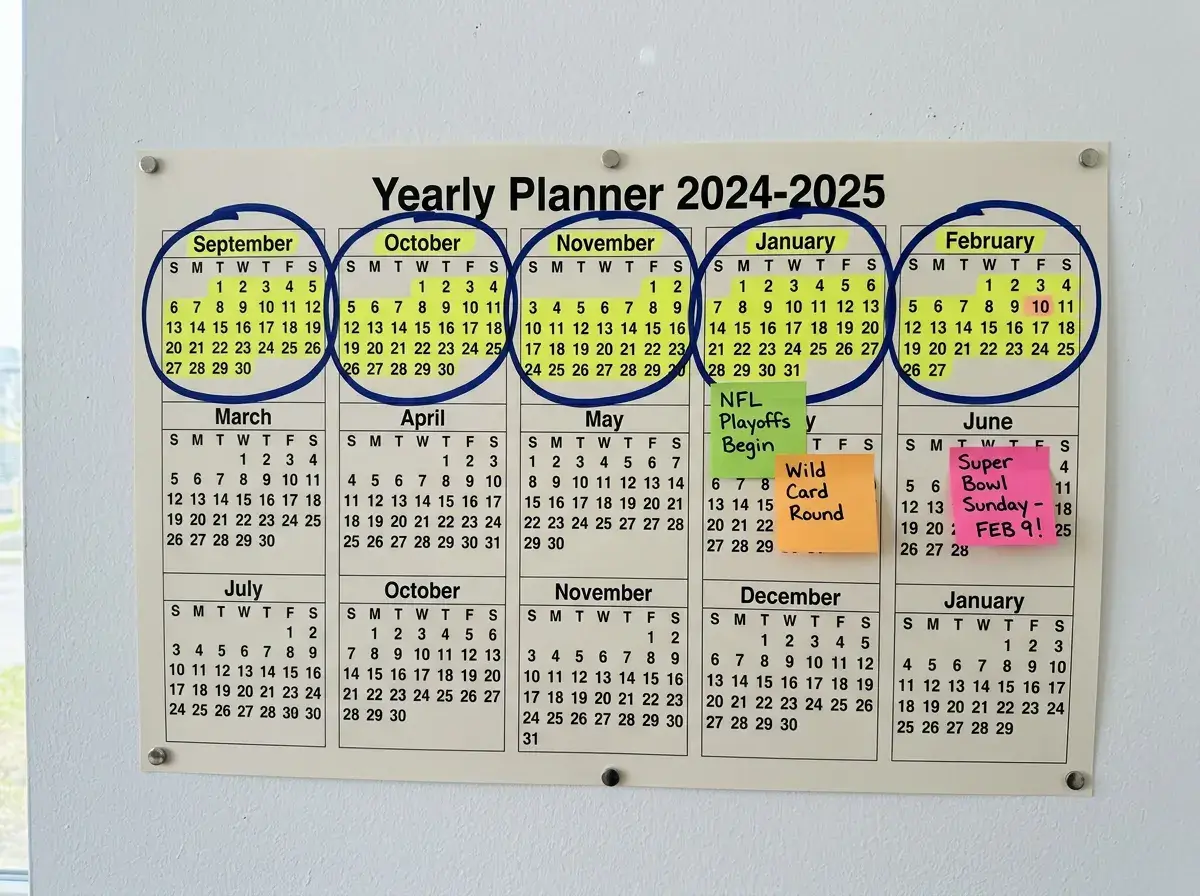
This guide maps the NFL season from the pre-season through the Super Bowl, with specific attention to the features that matter for UK-based bettors: bye weeks, scheduling quirks, and the unique dynamics of single-elimination playoff betting. If you are new to American football, this is the foundation. If you are experienced, treat it as a checklist — the structural edges are easy to forget when you are deep in weekly handicapping.
Understanding the bye week schedule is crucial for anyone looking to invest in long-term NFL futures markets like division winners.
The 18-Week NFL Regular Season: Betting Implications
The NFL regular season spans 18 weeks, with each team playing 17 games and sitting out one week on a bye. That 18-week window, running from early September to early January, is the core betting season. The NFL dominates sports betting volume in a way that no other American sport matches — a single Sunday slate generates more handle than entire weeks of MLB or NBA action.
The schedule is built around a predictable weekly rhythm. Thursday Night Football opens each week with a single game. The main Sunday slate features the early afternoon window (multiple simultaneous games) and the late afternoon window (typically two to three games). Sunday Night Football is the prime-time showcase. Monday Night Football closes the week. For UK punters, this structure means the busiest betting window is Sunday evening, with the early games kicking off at 6pm BST during the first half of the season.
The 32 teams are split into two conferences (AFC and NFC), each containing four divisions of four teams. Divisional opponents play each other twice per season — home and away — which creates a natural data advantage for bettors. By the second meeting between divisional rivals, you have a recent head-to-head result to analyse, adjusted for any roster changes, injuries, or tactical shifts since the first fixture. Divisional games later in the season tend to be tighter, lower-scoring, and more closely aligned with the spread than non-divisional matchups.
Scheduling patterns also matter. Teams coming off a Monday Night Football appearance and playing the following Thursday have the shortest possible preparation window — three days instead of the standard seven. This “short week” dynamic measurably affects performance, and totals for Thursday games following a Monday night appearance tend to be lower. The NFL has moved toward protecting teams from the worst scheduling disadvantages, but the short-week angle remains one of the most consistent structural edges in regular season betting.
How Bye Weeks and Short Weeks Affect NFL Betting
Every team receives one bye week during the season — a scheduled week off with no game. Bye weeks are staggered across weeks 5 through 14, and the schedule is designed so that no more than six teams are on bye in any given week. The betting implications are significant and frequently underpriced.
Teams returning from a bye week benefit from extra preparation time, physical recovery, and the ability to install new game-plan elements. Historical data consistently shows that teams playing after a bye perform slightly better against the spread than their opponents, particularly when the opponent is playing on a standard week. The edge is modest — roughly 1-2 percentage points against the spread — but over a full season of bye-week games, it adds up. More importantly, the spot is identifiable weeks in advance, giving you time to analyse the matchup and position your bet before the line adjusts.
The flip side is the “post-bye letdown,” which occasionally affects teams returning from rest. Some coaches struggle to maintain intensity through the off week, and players can lose rhythm if the bye falls at an inopportune moment. The post-bye letdown is harder to predict than the post-bye advantage, but monitoring coaching tendencies and team performance patterns around bye weeks can help identify spots where the expected boost does not materialise.
Short weeks are the inverse of bye weeks. Thursday Night Football forces at least one team — and sometimes both — to play on three or four days’ rest after the previous Sunday. The preparation window is compressed, injury recovery is limited, and complex game-plan installation is nearly impossible. Unders on Thursday Night Football have been a historically profitable angle for exactly this reason: tired teams play sloppier, more conservative football.
NFL Playoff Format: Single-Elimination Betting Dynamics
The NFL playoffs are structurally different from any post-season format in European sport. Seven teams from each conference qualify, the top seed in each conference receives a first-round bye, and every game from the wild card round onward is single-elimination. Lose once and your season is over. There are no aggregate scores, no second legs, no goal difference tiebreakers. One game decides everything.
For bettors, single-elimination changes the value equation fundamentally. In a league format or a two-leg tie, the better team prevails more often because the sample size smooths out variance. In a single game, anything can happen — a fumbled snap, a missed field goal, a fluky interception. The variance in single-elimination games is higher than in any other format, which means underdogs win more often than their regular-season record would suggest.
The Super Bowl sits at the apex of this structure. The American Gaming Association projected a record 1.76 billion dollars in legal wagers on Super Bowl LX, reflecting the event’s unique position as both the biggest single game in American sports and the culmination of a seven-month betting season. UK sportsbooks treat the Super Bowl as their marquee NFL event, with the deepest market offerings, the widest promotional investment, and the most aggressive odds competition of the year.
The playoff bracket also creates specific betting opportunities at each round. Wild card weekend features six games with significant mismatches between the top seeds and the weakest qualifiers — but those mismatches are often overpriced because the public overestimates the gap. Divisional round games are typically the highest-quality football of the year, with tight lines and genuine analytical challenges. Conference championship games carry enormous emotional weight, which can distort public betting patterns and create value on the less popular side.
Prepare for the upcoming kickoff by reviewing the comprehensive resources at GridironEdge.
NFL Season for Bettors: Quick Answers
The NFL season is a structured journey from September to February, and every phase offers distinct betting opportunities. Regular season rewards weekly discipline, bye-week awareness, and scheduling analysis. The playoffs reward an understanding of single-elimination variance and the courage to back underdogs when the market overprices favourites. Map the season, plan your bankroll around its phases, and let the structure work for you rather than against you.
How many games are in an NFL regular season?
Each NFL team plays 17 games over an 18-week regular season, with one bye week where they do not play. The season runs from early September to early January, followed by a four-round single-elimination playoff culminating in the Super Bowl in February. The full NFL betting calendar, including the pre-season and draft, spans from late April through to February of the following year.
What is a bye week and how does it affect NFL betting?
A bye week is a scheduled week off during the regular season when a team does not play. Each team has one bye week, staggered between weeks 5 and 14. Teams returning from a bye week benefit from extra rest and preparation, which historically translates to a modest advantage against the spread. Bettors should track bye-week schedules and factor the rest advantage into their handicapping, particularly when a team coming off a bye faces an opponent playing on a short week.
This material was created by the UK NFL Betting Analysis team.
Related posts

NFL Cryptocurrency Betting in the UK: Current Status and Regulatory Outlook

NFL Betting Mistakes That UK Punters Make — and How to Fix Them