Prospect Selection Algorithms and Offseason Value Exploitation
 Available in US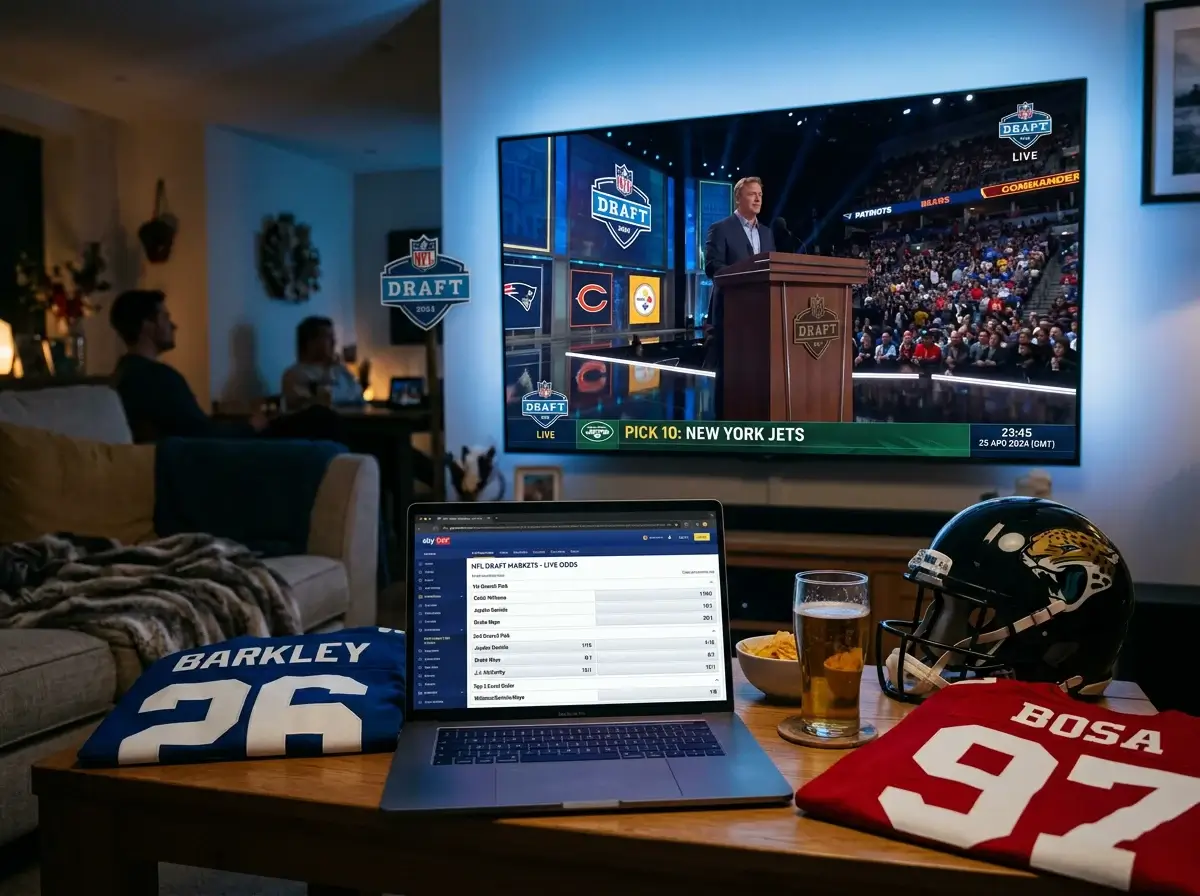
I backed Caleb Williams to go first overall in the 2024 NFL Draft at 1/5 and felt like I was printing money. The odds were short, the outcome seemed inevitable, and the bet settled without a moment of anxiety. The following year, I backed a quarterback at 3/1 to go first overall based on a strong combine performance and mock draft consensus — and watched the favourite get traded up for a defensive end instead. The draft taught me something that regular season betting never quite did: in this market, the information is public, the analysis is widespread, and the genuine edge comes from knowing which information sources to trust and which to ignore.
The NFL Draft is the second-biggest betting event on the American football calendar after the Super Bowl. In the US, the American Gaming Association projected 30 billion dollars in legal NFL wagers for the 2025 season, and the draft generates a meaningful share of that pre-season handle. UK sportsbooks have expanded their draft coverage significantly in recent years — what used to be a single “first overall pick” market has grown into a full menu of positional props, over/under draft slot bets, and conference-level specials. For UK punters, the draft represents a unique futures betting opportunity where research can genuinely outpace the market.
NFL Draft Betting Markets at UK Sportsbooks
The flagship market is the first overall pick. This is the most liquid, most heavily traded draft market and typically opens months before draft night. The pricing reflects the consensus of mock drafts, insider reporting, and sportsbook models. When the favourite is strong — a generational quarterback prospect with no realistic competition for the top spot — the odds can be as short as 1/10. When the picture is muddier, with multiple prospects in contention, you might see the favourite at even money or shorter with genuine value available on alternatives.
Beyond the first pick, UK sportsbooks offer a range of positional and player-specific markets. Over/under draft position is one of the most interesting: a sportsbook might set a line of 7.5 for a specific prospect, and you bet whether they will be selected in the top seven picks (under) or eighth or later (over). These lines are driven by mock draft consensus and insider reporting, but they can be surprisingly mispriced when a prospect’s stock is moving rapidly in the weeks before draft night.
First player selected at each position is another popular market. First quarterback taken, first wide receiver, first offensive lineman, first defensive player — each generates its own mini-market with distinct dynamics. The first quarterback market is typically the deepest, given the outsized importance of the position and the volume of media coverage it receives. Position markets further down the draft board — first safety, first tight end — offer thinner liquidity but potentially wider mispricings because sportsbooks devote less modelling effort to them.
Conference-level markets round out the typical UK offering. Total players drafted from the SEC, total first-round picks from the Big Ten, which conference produces the most selections — these are broader, more statistical markets that reward a different type of analysis than the individual player markets.
Researching NFL Draft Bets: Mock Drafts, Combine Data, and Leaks
Draft research is simultaneously the most accessible and most treacherous analytical exercise in NFL betting. The volume of publicly available information is enormous — every major sports outlet publishes multiple mock drafts, the NFL Combine generates precise athletic data on every prospect, and the insider reporting ecosystem produces a constant stream of rumours about team preferences and potential trades. The challenge is not finding information; it is filtering signal from noise.
Mock drafts are the starting point for most analysis, and they deserve a critical eye. The accuracy of individual mock drafters varies enormously. Some analysts have strong track records of predicting first-round selections; others are essentially guessing with a veneer of authority. Before weighting any mock draft in your analysis, check the author’s historical accuracy. Several independent websites track mock draft accuracy year over year, and the data reveals that even the best analysts correctly predict fewer than half of the first-round picks in a typical year. That sobering statistic should calibrate your confidence in any consensus view.
Combine and Pro Day data provides objective athletic measurements — 40-yard dash times, vertical jumps, bench press reps, agility drills — that can shift a prospect’s draft stock dramatically. A quarterback who runs a faster-than-expected 40-yard dash or a defensive end who tests off the charts in explosiveness drills can see his draft position projection jump by five to ten spots overnight. These measurable events create sharp, fast-moving line changes at sportsbooks, and the window to exploit them is narrow. If you are watching the Combine live (it airs in the UK on NFL Network and digital platforms), you can react to standout performances before the sportsbook adjusts the relevant markets.
Last-minute leaks and trade rumours are the highest-risk, highest-reward information source. In the 48 hours before the draft, insider reporters break stories about teams finalising trade packages, changing their draft board, or zeroing in on specific prospects. These leaks frequently move sportsbook lines, but their reliability varies. Some insiders have proven track records; others are amplifying speculation. The skill is knowing which reporters to trust and how heavily to weight their information against the broader consensus.
How the NFL Draft Shifts Season Futures Odds
The draft is not just an event to bet on directly — it is a catalyst that reshapes the entire futures market for the upcoming season. A franchise-altering first-round pick can move a team’s Super Bowl odds by several ticks overnight. When the Jacksonville Jaguars drafted Trevor Lawrence first overall, their win total and playoff odds compressed immediately. When a team trades away draft capital for a veteran quarterback, the market reprices both the acquiring and departing teams simultaneously.
Commissioner Roger Goodell has stated his goal of reaching sixteen international games per season, with every team playing one game abroad. That expansion affects draft strategy in a subtle but real way — teams building for an international fanbase may prioritise marketable skill-position players, which influences draft decisions that in turn move the futures market. The connection between the league’s international growth strategy and individual team draft decisions is indirect, but it creates ripple effects that sharp bettors can track.
The window between the draft and the start of the NFL season is the most active period for futures market repricing. Teams that “won” the draft according to analyst consensus see their win totals and playoff odds shorten, while teams that reached or traded away picks see the opposite movement. The key for bettors is to assess whether the market has overreacted or underreacted to draft outcomes. Historically, the correlation between draft-night analyst consensus and actual team performance is weaker than most people assume — a team that “won” the draft often does not see the rookies contribute meaningfully until year two or three, by which point the immediate post-draft odds movement has long since been absorbed.
NFL Draft Betting: Quick Answers
The NFL Draft rewards patient, research-driven betting. Unlike regular season games where you are handicapping matchups with limited preparation time, draft markets give you months to build a position. Use that time: track mock draft accuracy, monitor Combine results, identify which insider sources are reliable, and place your bets when the information advantage is clearest rather than waiting for the consensus to crystallise and the value to evaporate.
When do UK sportsbooks open NFL draft betting markets?
Most major UK sportsbooks open the first overall pick market three to six months before the draft, typically after the college football season concludes and the draft order begins to take shape. Wider markets — positional props, over/under draft position, and conference-level specials — usually appear four to six weeks before draft night. The market depth increases as the draft approaches, with the most comprehensive offering available in the final two weeks before the event.
Can I bet on which team will trade up in the NFL draft?
Some UK sportsbooks offer markets on draft-night trades, though availability is inconsistent and typically limited to high-profile scenarios. You might find a market on whether the first overall pick will be traded before the selection is made, or whether a specific team in the top ten will trade out of their slot. These markets carry very wide margins because the outcomes are highly uncertain and driven by private negotiations that are nearly impossible to predict from public information.
This material was created by the UK NFL Betting Analysis team.
Related posts

NFL Cryptocurrency Betting in the UK: Current Status and Regulatory Outlook

NFL Betting Mistakes That UK Punters Make — and How to Fix Them