Direct Winner Implied Probability and Pricing Differential Tactics
 Available in US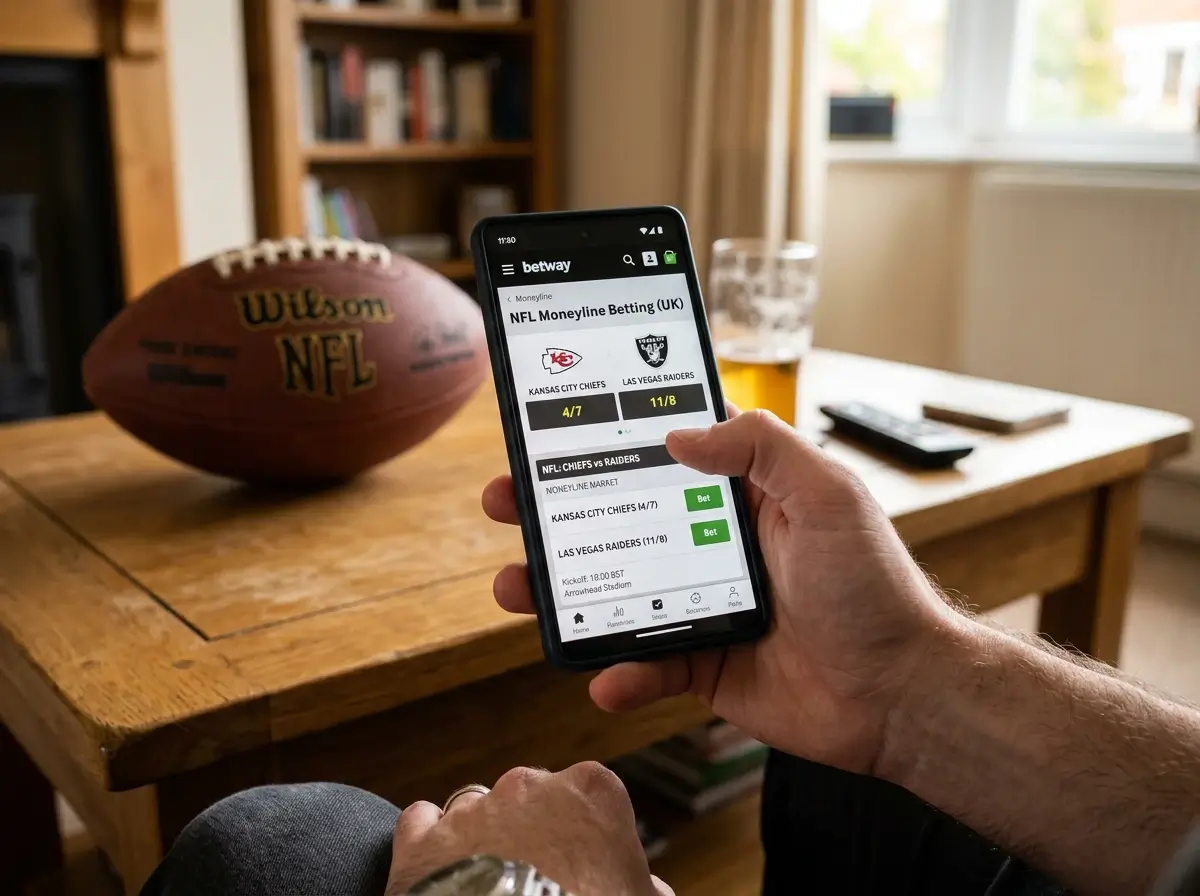
My introduction to the NFL moneyline was embarrassingly simple. I wanted to bet on the Buffalo Bills to beat the Miami Dolphins, and I did not care about the margin of victory. No handicaps, no spreads, no complication — just “pick the team that wins.” It was the easiest betslip I had ever filled out, and that simplicity is exactly why the moneyline remains the entry point for thousands of UK punters discovering American football betting every season.
The moneyline is the equivalent of a “match result” bet in football, with one key difference: there is no draw. NFL games that are tied at the end of regulation go to overtime, and overtime continues until a winner emerges. That binary outcome — one team wins, the other loses — makes the moneyline the cleanest possible NFL wager. You pick a side, and if they win by any margin, you collect. Sports betting accounts for 56.64% of UK online gambling revenue, and the moneyline is the gateway product that converts casual NFL viewers into active bettors.
How NFL Moneyline Bets Work in the UK
A Saturday afternoon in October, I backed the Jacksonville Jaguars on the moneyline at 11/4 against the Baltimore Ravens. Jacksonville was a clear underdog, but I had watched them dismantle a similarly styled defence the previous week and thought the market was overpricing Baltimore’s home advantage. The Jaguars won 24-21. That GBP 10 bet returned GBP 37.50. The spread had Jacksonville at +7.5 — it would have won too — but the moneyline paid nearly four times my stake, while the spread returned barely double.
At UK sportsbooks, the moneyline is displayed in fractional or decimal odds. A strong favourite might be priced at 2/9 (1.22 decimal), meaning you need to risk GBP 9 to profit GBP 2. A heavy underdog could be priced at 4/1 (5.00 decimal), returning GBP 50 from a GBP 10 stake. The odds directly reflect the sportsbook’s assessment of each team’s probability of winning outright.
One question I hear constantly from British punters new to American football: what happens if the game goes to overtime? Your moneyline bet rides. Whether the game is decided in regulation, in the first overtime period, or in any subsequent period, the bet settles on the final result. There is no separate “90 minutes only” or “to qualify” option as in football cup markets. The moneyline covers the entire game, full stop.
The no-draw feature is the moneyline’s defining characteristic for UK punters accustomed to three-way football markets. In a Premier League match, the draw absorbs roughly 25-30% of the probability, which spreads the odds and creates a different risk structure. In the NFL, that probability is divided entirely between two outcomes, which means favourites are priced shorter and underdogs are priced longer than you might expect relative to the perceived gap between the teams. Understanding that structural difference is essential for accurate value assessment.
Minimum and maximum stakes on NFL moneyline bets at UK sportsbooks follow the same rules as other markets. Most operators accept from GBP 0.10 to several hundred pounds per selection, though maximum payouts may cap your return on very long-shot underdogs.
Moneyline vs Point Spread: When Each Bet Makes Sense
I keep a spreadsheet that tracks the implied probability gap between moneyline and spread bets for every NFL game I consider. The gap is not constant, and recognising when it widens in your favour is one of the most reliable edges available to UK bettors.
When a heavy favourite is laying a large spread — say, -10 or more — the moneyline price collapses to very short odds, often around 1/5 or 1/6. At those prices, the return on investment is minimal: you are risking a lot to win a little. Meanwhile, the spread bet on the same favourite at 10/11 offers a near-even payout. The spread is almost always the better play on heavy favourites because the return per unit of risk is dramatically higher, and the additional requirement of covering the spread is offset by the improved odds.
For close games — a spread of three points or fewer — the dynamic flips. The moneyline and the spread produce similar implied probabilities, but the moneyline is simpler to evaluate. You do not need to worry about whether the team wins by enough; you only need them to win. In a game where the spread is -1.5 and the moneyline favourite is priced at 5/6, the two bets are nearly interchangeable. I default to the moneyline in these situations for clarity.
The strongest case for the moneyline is the live underdog with an outright winning chance. If I believe a team priced at +6.5 on the spread has a legitimate shot at winning the game — not just covering, but winning — the moneyline at 5/2 or 3/1 offers a much higher payout per unit than the spread at 10/11. The risk is greater, since the underdog needs to win rather than merely stay close, but the reward compensates. Underdog moneylines in the NFL hit at a historically significant rate — somewhere around 33-36% of games each season — which means there is structural value at the right price.
Combining NFL Moneylines Into Accumulators
NFL Sunday generates more betting handle than entire weeks of Major League Baseball, and a significant share of that volume flows through moneyline accumulators. The AGA projected USD 30 billion in legal NFL bets for the 2025 US season, and parlays — particularly moneyline parlays — represent one of the most popular products on those high-volume Sundays.
The logic is seductive: pick three or four NFL favourites to win outright, combine them into an accumulator, and collect a multiplied return. A three-leg moneyline parlay with each selection at 4/6 produces combined odds of roughly 3.7/1 — a GBP 10 bet returns GBP 47. The catch, as always, is that each leg must win. One upset kills the entire bet.
Favourite-heavy moneyline accumulators feel safe, but the maths tells a different story. Heavy favourites priced at 1/4 or shorter have implied probabilities above 80%, yet NFL games produce upsets at a rate that makes even three-leg favourite parlays a sub-50% proposition. I tracked 50 consecutive three-leg favourite parlays over two seasons, picking only teams priced at 1/3 or shorter. Hit rate: 41%. The combined return over the sample was negative.
When moneyline accas do make strategic sense, it is in small combinations of two legs where both games feature a strong mismatch and the combined price exceeds what you would accept on either single. Two legs at 1/2 each produce a parlay at roughly 5/4 — not exciting, but enough to make a GBP 20 stake feel worthwhile. Beyond two legs, the compounding variance erodes value faster than the combined odds can compensate, and you are better served placing the bets as singles.
NFL Moneyline Betting: Quick Answers
Is moneyline the same as match winner in UK betting terms?
Effectively, yes. The NFL moneyline is the American equivalent of a match result or match winner bet. The only difference is that NFL games cannot end in a draw, so the moneyline is a two-way market — you pick one team to win outright, and overtime is included.
What happens to a moneyline bet if an NFL game goes to overtime?
Your moneyline bet remains active through any overtime periods. The bet settles on the final result of the game, regardless of how many overtime periods are played. There is no separate option for regulation-time-only results at UK sportsbooks.
This material was created by the UK NFL Betting Analysis team.
Related posts

NFL Cryptocurrency Betting in the UK: Current Status and Regulatory Outlook

NFL Betting Mistakes That UK Punters Make — and How to Fix Them