Totals Verification Systems and Aggregate Point Validations
 Available in US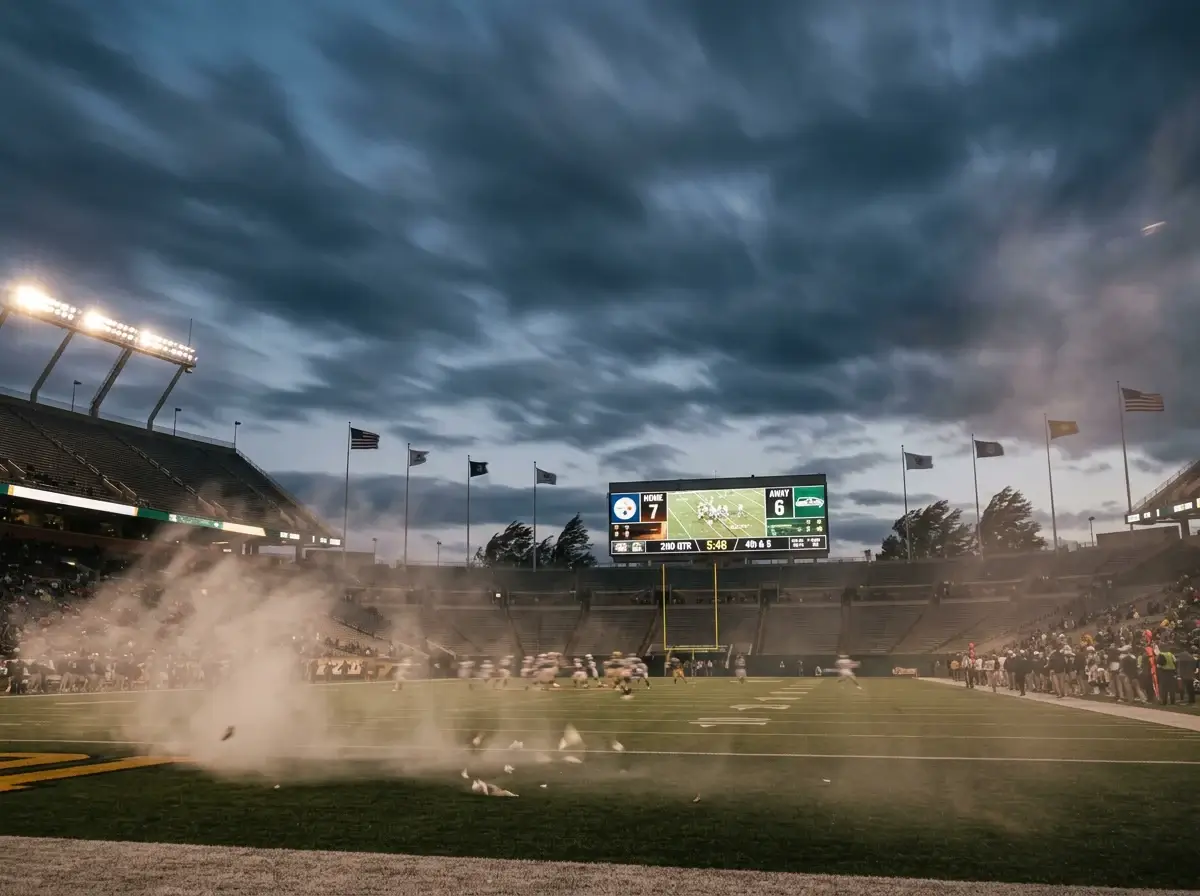
There is a game I still think about from the 2024 season: the forecast said 20 mph winds at Soldier Field, the total was set at 43.5, and I took the under. Final score, 9-6. The wind did exactly what the data said it would — it destroyed the passing game, stalled drives, and turned a matchup between two decent offences into an ugly defensive slugfest. That bet was not a guess. It was a weather report converted into a betting position, and that is the fundamental nature of NFL totals betting: it rewards research into factors that most casual punters ignore.
Over/under — or totals, as the market is technically called — is one of the three core NFL bet types alongside the spread and the moneyline. You are not picking a winner. You are predicting whether the combined final score of both teams will finish above or below a number set by the sportsbook. It is a market where 290 million online bets are placed every month across UK sportsbooks, and NFL totals attract a growing share of that volume because they let you have a view on the game’s character rather than its outcome.
How NFL Over/Under Bets Work
Last November, a mate asked me why his over bet lost when the game finished 24-21 and the total was set at 44.5. “That is 45 points,” he said, “I won.” He had missed the half-point. The total was 44.5, and 45 is above 44.5, so he actually had won. The confusion was that he had misread his betslip, which had the total at 45.5, not 44.5. That half-point difference — one lousy field goal — is the margin between collecting and losing, and it illustrates why reading your slip carefully matters more on totals than almost any other market.
The sportsbook sets a combined score total for the game, and you bet over or under that number. If the total is 47.5 and the game finishes 28-24 (combined 52), the over wins. If it finishes 20-17 (combined 37), the under wins. Half-point totals eliminate pushes entirely; whole-number totals like 44 allow a push if the combined score lands exactly on the line, in which case your stake is returned.
Overtime counts. This is a question I get asked constantly, and the answer is unambiguous at every UK sportsbook I have used: any points scored in overtime are included in the final total for settlement purposes. A game that is 20-17 at the end of regulation and finishes 23-20 in overtime has a combined score of 43 for betting purposes, not 37. This matters because overtime games add an extra scoring opportunity that the pre-game total was not specifically calibrated for, which subtly favours the over in games expected to be close.
Typical NFL totals range from the high 30s for defensive matchups to the low 50s for high-powered offensive games. The league average combined score has hovered around 44-46 points in recent seasons, which is where you will see the majority of lines cluster. Outliers — a game totalling 56.5 or 36.5 — tell you that the sportsbook sees a significant scoring skew in one direction, and those extreme lines often attract sharp action.
Key Factors That Move NFL Totals Lines
Wind is the single most underpriced factor in NFL totals betting, and I will defend that claim with data. When sustained wind speeds exceed 15 mph, average combined scoring drops measurably. At 20 mph and above, the decline steepens: passing accuracy falls, field goal attempts become unreliable beyond 40 yards, and offensive coordinators shift toward the running game, which consumes clock and reduces total possessions. Yet sportsbooks do not always adjust totals as aggressively as the wind data supports, particularly for games where the forecast shifts late in the week.
Pace of play is harder to quantify but equally important. Teams that run up-tempo offences generate more possessions per game, which creates more scoring opportunities for both sides. Conversely, run-heavy teams that control the clock suppress total possessions and tend to produce lower-scoring games. When a fast-paced offence meets a slow-paced defence, the line reflects a compromise — and that compromise can be exploitable if you have a view on which team’s tempo will dominate.
Defensive rankings matter in a specific way for totals. It is not enough to know that a defence is “good” — you need to know how it is good. A defence that generates turnovers creates short fields for its own offence, which can inflate the combined score even as it suppresses the opposing offence. A defence that simply prevents yards without forcing turnovers keeps the other side’s scoring down without giving its own offence easy opportunities. The first type is less predictive of unders than the second.
Injuries to key offensive players — particularly starting quarterbacks — can move totals by two to four points within hours of a confirmed absence. A backup quarterback entering a game reduces expected offensive output for that side, and the line adjusts accordingly. These movements are sharpest in the first 30 minutes after the news breaks, then settle as the market absorbs the information.
Venue matters more than most UK punters appreciate. Dome stadiums — places like SoFi Stadium in Los Angeles or the Superdome in New Orleans — eliminate weather as a variable entirely. Games played indoors historically average slightly higher combined scores than outdoor games, particularly in late-season matchups where cold, wind, and precipitation affect outdoor venues. When a dome team travels to an outdoor cold-weather stadium in December, the total tends to drop, and the odds reflect that venue shift with a lower line.
Over/Under Betting Strategies: Where UK Punters Find Edge
Tuesday morning UK time is when NFL lines open for the following Sunday’s games. That early-week window is the best time to bet totals if you have a strong view, because the lines are sharpest on the spread (where the most money sits) and least sharp on totals (where early-week volume is thinner). I have tracked my own results over six seasons, and early-week totals bets show a measurably better return than bets placed on Saturday or Sunday.
Divisional games — where two teams from the same division play each other twice a year — deserve special attention for under bettors. Familiarity between coaching staffs tends to produce tighter, lower-scoring contests. The second meeting of the season (typically in weeks 14-18) is particularly prone to unders because both teams have already seen each other’s game film and made defensive adjustments.
Primetime games — Thursday Night Football, Sunday Night Football, and Monday Night Football — carry their own scoring patterns. Thursday games, played on a short week with less preparation time, historically trend toward lower scoring. Sunday night and Monday night games, which feature high-profile matchups selected by the league for viewership appeal, tend to involve better offences and produce slightly higher combined scores. One NFL Sunday generates more betting handle than entire weeks of other major sports, and the primetime slate attracts a disproportionate share of that action — meaning the market is more efficient but the lines still reflect public bias toward overs on nationally televised games.
NFL Over/Under Betting: Quick Answers
Does overtime count for over/under NFL bets?
Yes. At every UK sportsbook, the final score including any overtime periods is used to settle totals bets. If a game that is 20-17 at the end of regulation goes to overtime and finishes 23-20, the combined total for betting purposes is 43.
What is the average NFL total set by UK sportsbooks?
The average NFL game total at UK sportsbooks has ranged between 44.5 and 46.5 in recent seasons, though individual games can be set anywhere from the high 30s to the low 50s depending on the matchup, venue, and weather conditions.
Do UK sportsbooks adjust NFL totals for bad weather?
Sportsbooks adjust totals based on weather forecasts, but the adjustments do not always fully reflect the impact of conditions like high wind or heavy rain. Lines typically move one to three points in response to severe weather reports, though late-breaking forecast changes may not be fully priced in before kickoff.
This material was created by the UK NFL Betting Analysis team.
Related posts

NFL Cryptocurrency Betting in the UK: Current Status and Regulatory Outlook
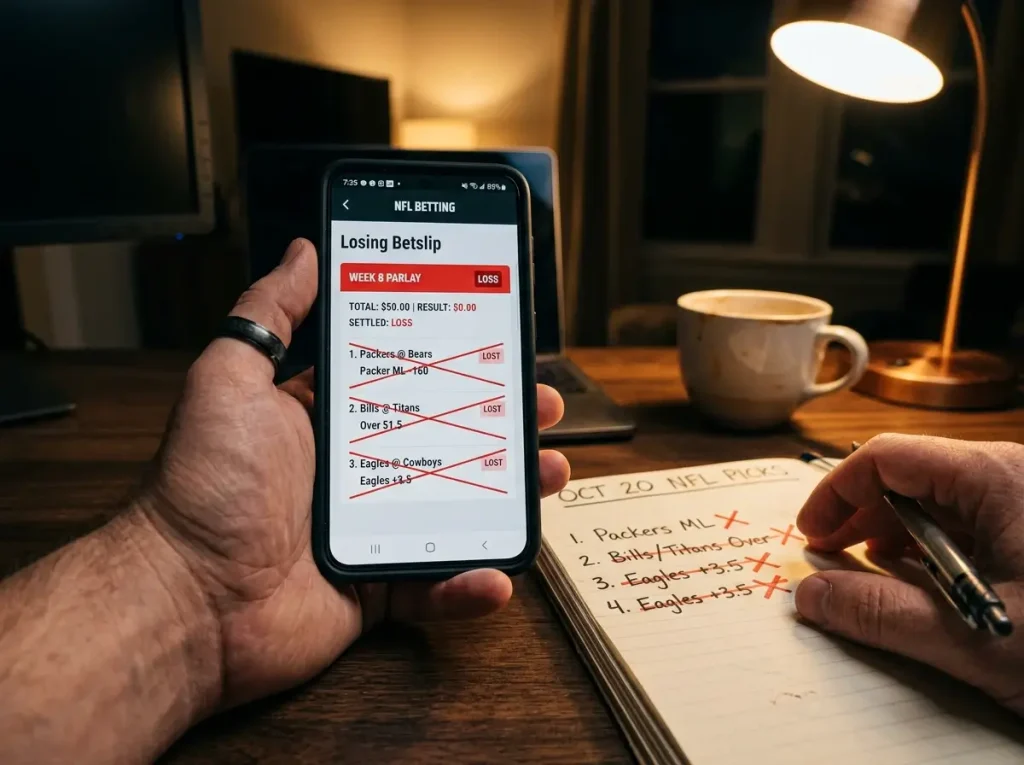
NFL Betting Mistakes That UK Punters Make — and How to Fix Them