Player Volume Estimations and Singular Event Arbitrage Formulations
 Available in US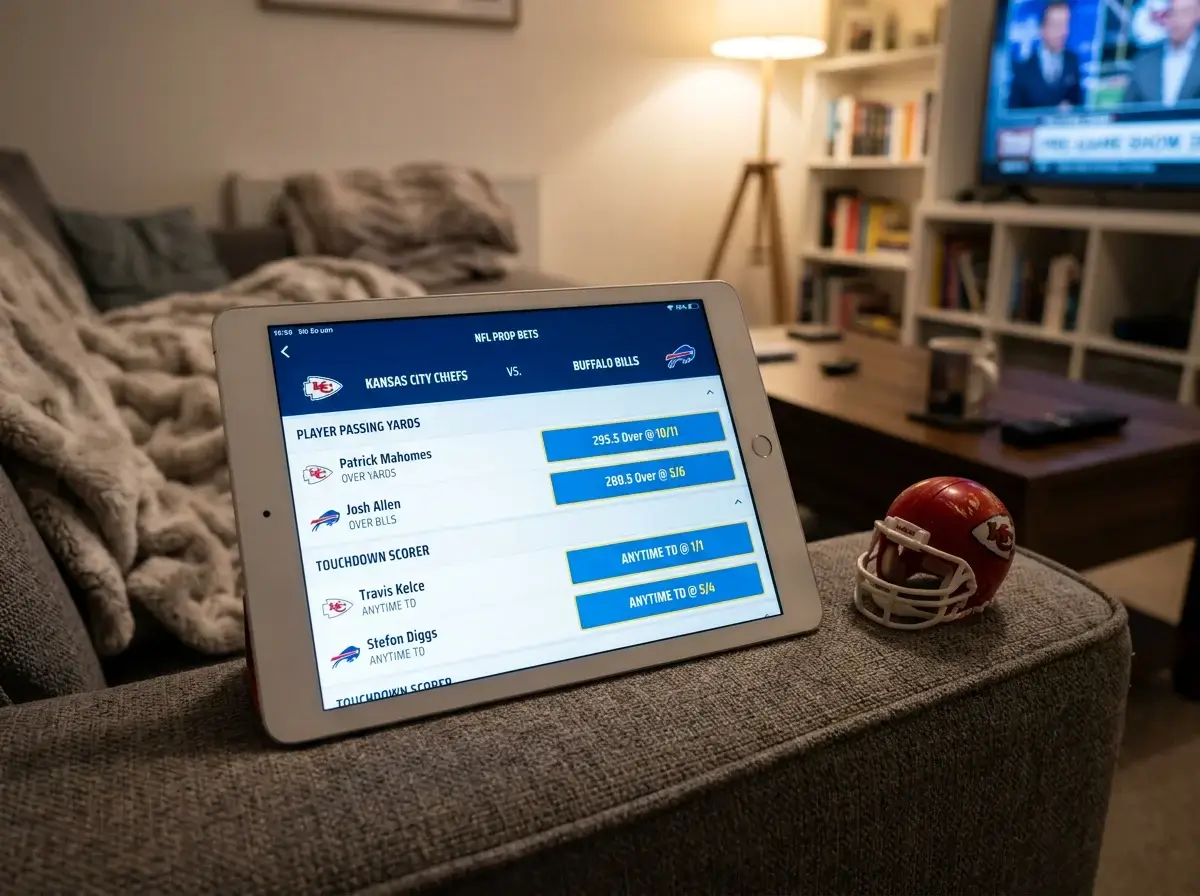
The first prop bet I placed on the NFL was an anytime touchdown scorer market. I picked a running back based on nothing more than the fact that he had scored the previous week. He got injured in the second quarter and finished with four carries. That was the moment I understood that props reward research, not instinct — and that the research required is completely different from what you need for spreads or totals.
Proposition bets — props, for short — let you wager on individual performances and specific events within an NFL game rather than on the final outcome. They are the fastest-growing segment of American football betting, driven partly by the sheer volume of statistical outputs that every NFL game produces. A single match generates passing yards, rushing yards, receiving yards, completions, touchdowns, sacks, interceptions, and dozens of other measurable events. Each one represents a betting market at UK sportsbooks, and each one carries its own margin, its own research requirements, and its own opportunities.
Player Prop Markets for NFL Games at UK Sportsbooks
During the 2025 playoffs, I built an entire betting approach around quarterback passing yards. Not because I am smarter than the sportsbook models, but because I had access to the same matchup data they used and spotted a few instances where the posted lines lagged behind what the defensive splits actually suggested. That edge — small, temporary, and dependent on timing — is the reality of player prop betting.
Passing yards over/under is the most liquid player prop market for NFL at UK sportsbooks. The line might sit at 265.5 for a quarterback, and you decide whether he finishes above or below that number. These are priced similarly to game totals — typically around 10/11 on each side — though the margin can creep higher on less popular quarterbacks or smaller games.
Rushing yards and receiving yards props follow the same over/under structure but with lower totals and often wider margins. A running back’s line might sit at 72.5 yards, while a wide receiver could be set at 65.5. The variability in individual performance is higher here than for quarterbacks, which is partly why sportsbooks charge a steeper price.
Touchdown scorer markets split into two categories: anytime and first. Anytime touchdown scorer asks whether a player will score at least one touchdown during the game. First touchdown scorer asks whether a specific player will score the opening touchdown. First scorer bets pay significantly higher odds — often 10/1 or more — but the probability of any single player scoring first in a game with 22 starters is correspondingly low. I treat first scorer markets as entertainment with a lottery-style payout, not as a serious strategic option.
Completions, interceptions, and sacks round out the major player prop categories. Quarterback completions over/under, typically set around 22.5 to 26.5 depending on the passer, tracks how often the quarterback connects with a receiver. Interceptions props — often set at 0.5 — are binary bets on whether a quarterback throws a pick. Sacks props bet on whether the defensive pressure will produce a specific number of takedowns. Each of these is available at most major UK sportsbooks for primetime games, though the range narrows considerably for early-window Sunday matches.
Game Props and Team Props: Betting Beyond the Final Score
I once placed a bet on “first team to score” during a divisional playoff game, backing the underdog based purely on the fact that they won the coin toss 60% of the time and deferred to the second half — meaning the other team received first. That kind of granular thinking is what game props demand, and it is miles removed from simply picking a winner.
First team to score is among the most popular game props at UK sportsbooks. It strips the game down to a single question: which side puts points on the board first? The outcome depends on the coin toss, offensive efficiency on opening drives, and field position — factors that are somewhat independent of which team is the overall better squad.
Total touchdowns in a game is another widely offered market. The line typically sits between 4.5 and 6.5 depending on the matchup, and it behaves differently from the game total because touchdowns are not the only way to score — field goals and safeties contribute to the game total but not to the touchdown count.
Highest-scoring quarter, race to a specified number of points, and margin of victory props add further layers. Highest-scoring quarter is interesting because NFL games tend to produce more scoring in the second and fourth quarters due to two-minute drills and increased urgency. Race to 10 or 20 points is essentially a time-limited moneyline: which offence will reach the threshold first? Margin of victory groups the final score difference into bands — 1-6 points, 7-12 points, 13-18, and so on — each priced at odds reflecting historical frequency.
The variety is part of the appeal, but also part of the risk. Game props generally carry higher margins than mainstream markets like spreads and totals. The sportsbook knows that prop bettors are often motivated by entertainment rather than edge, and the pricing reflects that asymmetry.
Finding Value in NFL Props: Research-Driven Approaches
Genius Sports holds the exclusive contract to distribute official NFL data through to Super Bowl 2030, which means every UK sportsbook builds its prop lines from the same underlying feed. That shared data foundation creates a specific kind of opportunity: when the public information changes faster than the lines adjust, there is a window of value.
Injury reports are the most actionable edge in player props. When a starting cornerback is ruled out, the wide receiver he would have covered sees an immediate boost in expected receiving yards. If the sportsbook has not yet adjusted the receiver’s prop line — and during the busy Thursday-to-Sunday cycle, updates sometimes lag by hours — the over on that line carries genuine value. I check the official NFL injury report every Wednesday, Friday, and Saturday morning UK time, specifically for changes that affect the defensive side of the ball.
Matchup analysis extends the same logic. A running back facing a bottom-five rush defence has a structurally different expected output than the same player against a top-five unit. The prop line should reflect that difference, and often it does — but not always with the precision that detailed matchup data supports. Cross-referencing a team’s defensive DVOA splits with the opposing offence’s play-calling tendencies is not glamorous work, but it is where prop value consistently appears.
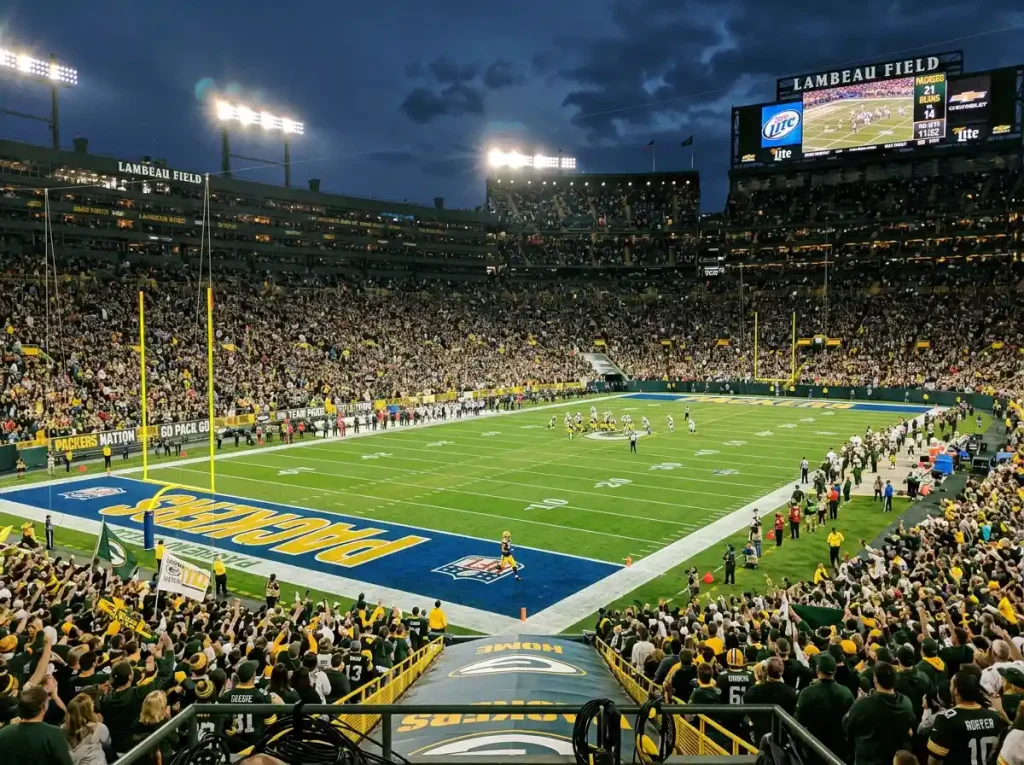
Weather deserves a mention too. Wind above 15 mph suppresses passing volume and accuracy, which directly affects quarterback passing yards, completions, and touchdown props. Rain and cold temperatures increase fumble risk and favour the running game. These are not subtle effects — the data on outdoor games played in wind speeds above 20 mph shows measurable scoring declines — and yet prop lines for late-season outdoor games are not always adjusted as aggressively as the conditions warrant. If you are betting player props at a UK sportsbook for a December game at Lambeau Field, check the weather before you check the odds.
One last note on margin: prop markets at UK sportsbooks typically run an overround of 8-12%, compared to 4-5% on spreads. That wider margin means you need a larger edge to break even on props over the long run. Be selective. Super Bowl week is where prop markets expand dramatically and liquidity peaks — it is the best single window of the year for UK prop bettors looking for pricing inefficiency.
NFL Prop Bets: Quick Answers
What is the difference between a player prop and a game prop?
A player prop bets on an individual’s performance — passing yards, touchdowns scored, or receptions by a specific player. A game prop bets on an event within the match that is not tied to one player, such as which team scores first, the total number of touchdowns, or the margin of victory.
Can I combine prop bets into a parlay at UK sportsbooks?
Yes, most UK sportsbooks allow you to combine prop bets into an accumulator, either with other props or with mainstream markets like spreads and totals. The bet builder or same game multi feature is specifically designed for combining multiple selections from a single NFL match, including player and game props.
This material was created by the UK NFL Betting Analysis team.
Related posts

NFL Cryptocurrency Betting in the UK: Current Status and Regulatory Outlook
NFL Betting Mistakes That UK Punters Make — and How to Fix Them